
Guide to Rhode Island Divorce Records
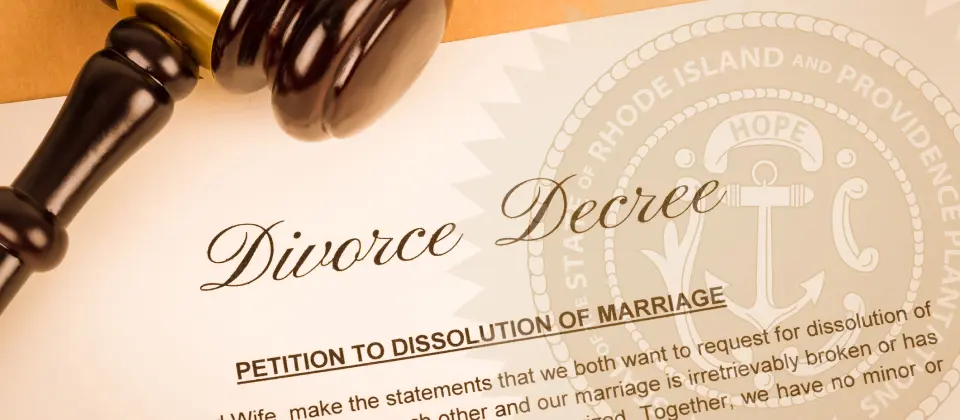
Although divorce laws and obtaining copies of divorce records vary greatly depending on the state in which you live, the overall process for divorcing in the US is very much alike. A divorce case in Rhode Island begins when one spouse files a “complaint” with the Family Court. At this time, the Family Court is required to document each step of the case for future reference and to create a permanent record of the legal proceedings leading up to the termination of the marriage.
The Family Court in Rhode Island maintains these court records as the official documentation of a terminated marriage.
The specific details in a record can vary depending on the type of document required. However, many Rhode Island divorce records include similar general information about the divorcing couple and the case. This information may include:
Names of each spouse involved in the divorce
The county in which the divorce action was initiated
The court that heard the divorce case
Date that the divorce was finalized
The case number assigned to the divorce by the court
Decisions made by the court regarding the division of marital assets, alimony, child custody, child support amounts, etc.
Whether the divorce was contested or uncontested
Rhode Island divorce cases typically involve the division of marital assets and the determination of child custody. Therefore, Rhode Island uses an equitable distribution approach and considers the child's “best interest” when making these decisions.
Divorce records are primarily maintained by Rhode Island courts. The older divorce records are most often in paper or archived formats, while the more recent divorce records are in a digital system accessible through the court office or other approved method.
Understanding the basic procedures for dividing marital assets and determining child custody will also assist you in your search for official divorce documents and in understanding how they are stored.
Where Are Rhode Island Divorce Records Stored?

Divorce records in Rhode Island are generally stored at the county level by the Rhode Island Family Court, which hears every divorce case in the state. Since Rhode Island has a unified court system (one system of courts), there is no division of county courts for divorce; therefore, the Family Court maintains divorce records rather than by county jurisdiction.
Unlike many states that have an official statewide index for accessing divorce certificates through the state's vital records office, Rhode Island does not have such a platform for obtaining complete copies of divorce certificates. If you want to obtain an official copy of your divorce documents, you will need to contact the clerk of the Family Court where your case was heard.
Older divorce records in Rhode Island are more likely to be in physical formats, such as paper copies of court files or archives, whereas newer divorce records are increasingly accessible through digital systems administered by the courts.
Is Rhode Island a 50/50 Divorce State
Rhode Island divorces do not follow a “50/50” format. Rather, the state follows an equitable distribution model. When dividing marital assets and debts, Rhode Island courts will divide them based on what they deem fair, rather than splitting them down the middle. 50/50 states, also called community property states, automatically split assets equally. Rhode Island laws provide the courts with greater flexibility in decision-making.
Rhode Island General Laws Section 15-5-16.1 directs how the courts can divide marital property. The law gives the court the authority to divide marital property as it deems “just and equitable,” while considering many factors related to the parties' marriage. It also states that marital property is divisible by the courts, whereas separate property cannot be shared unless it has become commingled with the other spouse's marital property.
A number of factors influence the Rhode Island courts' decision regarding equitable distribution of all marital property and debt, including:
Length of the Marriage: Generally, longer-term marriages tend to result in an equal distribution of property and debt, while short-term marriages tend to result in each party retaining most of their pre-marriage assets and debts.
Contributions of Each Spouse: The court will consider the economic contributions made by each spouse, as well as non-economic contributions, including childcare and household management.
Income and Earnings Capacity: The parties' current income, work experience, and future earning potential will be reviewed to determine whether a justifiable distribution of property and debt is warranted.
Marital vs. Separate Property: In general, property owned prior to the parties' marriage or inherited property will remain the separate property of the owner unless it becomes commingled with other marital property.
Fault Considerations: Rhode Island is a “no-fault” state, but does allow consideration of fault in a divorce proceeding. If one of the spouses committed marital misconduct that had a monetary impact on the parties or impacts the court's determination of fairness, then the court may take this into account.
Types of Rhode Island Divorce Records

Different types of divorce records are created for several purposes, such as providing evidence that a divorce has occurred or detailing the court's final judgment. A certificate is usually sufficient when someone just wants to confirm that a divorce occurred; an individual seeking the exact wording of the court's decision will need to order a copy of the court's original judgment.
Rhode Island Divorce Certificate (Certificate of Divorce)
Divorce certificates in Rhode Island are abbreviated summary records issued by the Clerk of the Family Court where the divorce was completed; they do not come from a centralized state vital records office.
The divorce certificate verifies that a divorce occurred but contains no details regarding the divorce action itself or the court's orders. The divorce certificate can generally be used to identify an individual, support a remarriage application, or serve as supporting documentation for various administrative purposes.
Typically, a Rhode Island divorce certificate will include the names of the individuals involved, the date the divorce was finalized, and the name of the court that granted it. However, the divorce certificate is only a summary document; if you need the specific legal aspects of the divorce action, you will still need the divorce decree, as the certificate cannot substitute for the decree.
Divorce Decree (Final Judgment of Divorce)
The divorce decree (also known as the Final Judgment of Divorce) is the official, legally binding record of divorce in Rhode Island. This document is issued by the Rhode Island Family Court and signed by a judge on completion of a divorce case.
Divorce decrees provide the final official record of all court decisions made during a divorce case and can be enforced as a matter of law. A divorce certificate differs from a divorce decree. A divorce certificate only confirms that a marriage between two individuals has ended, whereas a decree sets out the full terms of the divorce and is required to resolve any disputes that may arise or to enforce any court-ordered obligations.
A typical Rhode Island divorce order will include:
Property and Debt Division: The method by which all marital property is to be distributed between both spouses.
Custody/Child Support: Who has legal or physical custody of the children, what rights each parent has regarding the children, and any responsibility to pay child support.
Alimony (Spousal Support): If one spouse receives alimony from the other spouse. What amount of money will the paying spouse have to provide to the receiving spouse, how long this payment shall continue, and if there are any limitations on these payments.
Final Judgment Date: The date that the Judge signs the order, marking the end of a married couple.
How to File for Divorce in Rhode Island (Step-by-Step)
Before filing for a divorce in Rhode Island, you have to meet the requirements for being a resident of the State of Rhode Island. The Rhode Island General Statutes § 15-5-12 provides that no divorce will be issued by the Rhode Island Family Court until at least one of the spouses has been a resident in the state for at least one year prior to the filing of the divorce action.
There is a limitation on the one-year requirement. If the non-resident spouse is properly served in the state of Rhode Island before the expiration of the one-year period within which the resident spouse was required to establish domicile in Rhode Island, the Rhode Island Family Court will have jurisdiction of the action.
Before proceeding, you should determine whether your divorce will be uncontested or contested, as this affects the length, complexity, and cost of the process.
Uncontested Divorces: When both spouses agree on the main issues of their divorce, including dividing property, deciding who gets custody of the children, determining how much child support will be paid, and whether spousal support will be paid, that is called an uncontested divorce.
An uncontested divorce usually takes less time, costs less money, requires fewer court appearances, and gives both spouses a great deal of input into how each issue will be handled. Since both spouses agreed on the major aspects of their divorce prior to filing, they can establish the terms of the divorce rather than have a judge make those determinations.
Contested Divorces: A contested divorce occurs when spouses disagree on one or more major aspects of the divorce. When both spouses cannot reach an agreement on some of the main aspects of their divorce, the court becomes involved to help resolve those disputes.
This generally leads to a longer and more complicated divorce process. The divorce process can include: exchanging financial information, attending a hearing, using mediation, and, in some instances, attending a trial. The court makes the final decision on all issues, and both parties must comply with it, even if they disagree.
Step-by-Step Divorce Process
The steps to file for divorce in Rhode Island may vary across counties, depending on whether you are filing a contested or uncontested divorce.
Prepare the Filing Packet
At this stage, you are expected to gather all the documents you need to file for the divorce. Ensure your documents are accurate to avoid delay.
Identify the Divorce Path (1A vs. 1B): Determine whether all issues have been resolved (uncontested) or if there are still issues pending (contested).
Typical documents: A divorce filing packet in Rhode Island contains several important forms, including:
The Complaint for Divorce (FC-56): The most important document that begins the case and sets forth what the divorce petitioner is asking of the court.
The Summons (AO 440): Informs the defendant spouse of the divorce complaint and advises them that they have a limited time frame to respond.
DR-6 Financial Statement (FC-5): Both spouses provide detailed financial disclosures outlining their monthly income, monthly expenses, all assets, and debts as part of this document.
The Statement Listing Children (FC-59): If the divorcing couple has minor children; provides basic information for the court to consider when making decisions regarding custody of the minor children.
Family Court Cover Sheet (FC-75): An administrative document submitted with the divorce petition that helps the court process your case.
After filing and any required hearings, additional documents must be completed to finalize a divorce. These include the Decision Pending Entry of Final Judgment (FC-44) form and the Final Judgment of Divorce (FC-45) form.
Along with the above, other important documents used in obtaining a divorce are: marriage certificate (copy), financial statements, income verification, domestic relations cover sheet, property inventory, proof of residency, and child custody documentation (if applicable).
You can access Rhode Island divorce filing packets using the Guide and File webpage provided by the Rhode Island Family Court.
Filing Fees and Fee Waivers: The cost of filing for divorce with the Rhode Island Family Court is approximately $160-$200, depending on the specific case and any additional services used.
Rhode Island allows individuals to apply for a fee waiver if they are unable to pay the filing fees. To do so, the individual will need to submit a financial affidavit to the court outlining their income and expenses and providing evidence of financial hardship. If the court approves your request for a fee waiver, it will not require you to pay the filing fee; in many instances, it may also waive or reduce other court-related costs.
File the Case
You can file the case after you have collected all of the necessary documents and paid the required filing fee.
Where to File: Rhode Island Divorces are typically filed at the Rhode Island Family Court. There are offices located within each county (Providence County, Kent County, Washington County, Newport County, and Bristol County), so the location where you or your spouse resides determines which division of the family court you file in.
Filing Methods: The Rhode Island Family Court allows for several options when it comes to filing a divorce complaint:
In Person: Complete all of the required documents and pay the filing fee, then present them to the Clerk's Office of the Family Court in the county in which you reside.
By Mail: Send the complete set of divorce complaint documents, including either the filing fee or an application for a fee waiver, to the correct Family Court Division. If you would like copies of your documents returned, please send a self-addressed stamped envelope.
Electronic Filing (eFiling): Some Family Court Divisions currently offer eFiling for both uncontested and contested divorces. Please check your county's court website to determine whether it offers this service
What You Receive: After successfully completing the filing process, the court will provide:
A case number as a reference point in your case and for tracking purposes
A summons, if your divorce is contested
Initial court notices
Service of Process (Primarily for Contested Cases)
In Rhode Island, after a spouse files for divorce, the court will require that the other spouse be formally notified of the proceedings. This formal notification process is known as “service of process” and gives the other spouse an opportunity to respond to the divorce proceedings. The court provides the following methods to deliver the divorce papers to the spouse being served:
A sheriff or constable
A professional process server
Certified mail
Once the divorce papers have been delivered to the spouse (and the spouse has received them), the individual responsible for serving them must file a Proof of Service (affidavit) with the Family Court. If the other spouse cannot be located or is actively avoiding service of process, Rhode Island courts allow alternative forms of service. Alternative forms of service of process may include:
Publishing the notice in a newspaper approved by the court
Serving the summons and complaint on the spouse at their last known address
Sending the documents via certified or first-class mail, without confirmation of receipt
However, you will need to provide the court with documentation to show that you used reasonable effort to locate the spouse before they will approve any alternative service method.
Early Case Phase and Temporary Orders
The court can issue temporary orders to address critical issues during the pendency of the divorce action. Temporary orders are used to provide a measure of stability to both parties and any minor children and to protect the rights of all parties during the time leading up to entry of the final decree.
Additionally, by maintaining the “status quo”, the court prevents either party from making changes to the marital assets, such as selling the marital home, restricting each party's ability to make important financial decisions, or changing the living arrangement of the parties.
Temporary Custody and Visitation: The court may order temporary arrangements for the custody and visitation of children, even if the divorce action has not yet been resolved.
Temporary Child or Spousal Support: Temporary child or spousal support may be ordered by the court to provide for the basic needs of the minor children or to support the lower-income spouse.
Exclusive Use of the Marital Residence: The court may grant one spouse exclusive use of the marital residence.
Restraining or Protective Order: If there are legitimate fears of physical abuse, harassment, or threats being made by one spouse against another spouse or the children, the court can issue temporary protective or restraining orders.
Financial Disclosures and Discovery
In Rhode Island divorce proceedings, especially contested divorces, each spouse is required to disclose all their financial information so the court has sufficient information to make an equitable decision regarding the distribution of marital property, spousal support, and child support.
Mandatory Financial Statements: Each spouse must file a mandatory financial statement listing income, expenses, assets, debts, and any other sources of income. The accuracy of this information is extremely important, as it will be used by the court to issue its orders.
Supporting Documentation: The filing of the financial statement requires supporting documentation, including pay stubs, tax returns, bank statements, retirement account statements, mortgage statements, and any other documentation evidencing assets or liabilities.
Discovery Tools: If one spouse believes that the other spouse has failed to disclose an asset or income, the Rhode Island Family Court gives parties the right to use several discovery tools for obtaining financial information related to the pending divorce:
Request for Documents: A written request to a spouse to produce the spouse's financial documents or supporting documentation.
Interrogatories: Written questions to be answered under oath, requesting a spouse to provide additional information regarding income, property, debts, etc.
Subpoenas: Legal orders that require third parties, such as banks and employers, to provide records or testify concerning the relevant financial information related to the divorce proceeding.
Depositions: Sworn oral testimony given outside of court, recorded for use in court.
Case Management and Court Conferences
The court may hold an initial case management conference to assess how the case is progressing. During this conference, the judge or court officer will usually verify that each party has submitted the appropriate documents and financial information and has completed any required discovery. In addition, the court can, at this time, set timelines for completing discovery, file motions, or set future hearing dates.
Likewise, prior to a trial, courts often conduct a pretrial conference to finalize all of the remaining procedural matters. Pretrial conferences allow the court to review the evidence, confirm which remaining disputes exist, discuss settlement options, and set a trial date if the parties cannot reach an agreement.
Judges expect both parties to be prepared, organized, and cooperative with each other. Therefore, during these meetings, parties should be prepared to:
Complete and file all required financial disclosure documents and supporting documentation
Clearly articulate their positions regarding custody, support, or property issues
Engage in any court-ordered mediation and settlement discussions
Settlement or Trial
As a divorce case develops in Rhode Island, it will normally be resolved either by settlement or by trial, depending on how the spouses resolve their disputes. The Rhode Island Family Court generally encourages settlement in divorce matters.
In Rhode Island, many divorce cases are settled by the parties, without the need to go to trial, using one of the following methods:
Direct negotiations
Mediation
Attorney-led discussions
Once an agreement has been reached, the terms are usually set forth in a written settlement or marital agreement, which is then presented to the court, approved, and included in the parties' final judgment.
If the parties do not reach an agreement on the issues, the case will proceed to trial, where they will present their positions and supporting evidence to a judge in the Family Court.
Judgment, Waiting Periods, and Finalization
In Rhode Island, the divorce process does not end when a judge enters a divorce order.
The 90 Day Waiting Period: Once the judge has signed the Final Judgment of Divorce, Rhode Island law institutes a 90 Day Waiting period, during which the divorce will not be considered “final.” This waiting period is referred to as the “nisi” period. Pursuant to Rhode Island General Laws § 15-5-23, on the expiration of the 90-day waiting period, the divorce will become final without further court intervention.
Restrictions on Remarriage: Since the divorce is not a final divorce until the end of the 90-day waiting period, neither party may marry another person during that time. At the end of the 90-day waiting period, when the judgment becomes final, both parties are free to marry.
Child Custody and Child Support in Rhode Island Divorces
Decisions regarding child custody and child support in Rhode Island are typically decided by the Rhode Island Family Court. The Family Court's goal is always to protect the child's health and well-being.
When a court makes a decision regarding custody of a child in Rhode Island, it uses the “best interest of the child” standard. The judge will consider which arrangement would be most beneficial to the child's physical and emotional well-being. Some factors the judge may evaluate are:
Each parent's ability to provide for the child
The child's relationship with each parent
The stability of the home environment
The child's current age and basic needs
The child's preferences are based on their level of maturity
Legal Custody vs. Physical Custody
The court's primary concern when making a decision regarding custody is to determine which custody arrangement will serve the “best interests” of the minor child.
There are two types of custody arrangements in Rhode Island:
Legal Custody refers to the right to make major decisions regarding your child's upbringing, which could include things like school, medical care, and general well-being. Legal Custody can be jointly held by both parents (joint legal custody) or solely by one parent.
Physical Custody refers to where the child will reside on a daily basis. If a court grants one parent primary physical custody, then that parent would retain responsibility for the child's daily needs, and the non-custodial parent would retain visitation rights. Conversely, if both parents share physical custody under an agreement between them, the court will decide based on the child's best interests.
Child Support Guidelines and Enforcement
Child support in Rhode Island provides a consistent financial resource to meet the children's needs and is calculated based on state guidelines that consider the following factors:
Each parent's gross income
Number of children
Healthcare and childcare expenses
Amount of time spent by the child with each parent
Child support orders are legally enforceable. If one parent fails to make payments, the court has the authority to take enforcement actions such as:
Wage garnishment
Interception of tax refunds
Suspension of driver's licenses or other professional licenses
Court enforcement actions, which can result in jail time or fines
Property, Debt, and Alimony in Rhode Island Divorces
Divorce issues in Rhode Island, including how to divide property, allocate debts, and determine alimony awards, are resolved in the Rhode Island Family Court using a fair (equitable) distribution model for property and debt.
Under Rhode Island General Laws § 15-5-16.1, property is divided into two categories: marital property and separate property.
Marital Property: Generally includes all property acquired during the marriage, such as income, real estate, and retirement accounts. All marital property is subject to division by the court.
Separate Property: Generally includes all property owned by either spouse prior to the date of marriage. Separate property generally includes gifts and inheritances received by either spouse during the marriage. Separate property remains with the original owner unless it has been commingled or otherwise merged with other marital property.
Depending on the individual circumstances of the marriage and the specific financial needs of both spouses, Rhode Island courts may award spousal support, also known as alimony. Some common types of spousal support are:
Temporary Alimony: Paid to the lower-income spouse from the date of the divorce until it is finalized
Rehabilitative Alimony: Short-term and paid to the spouse to obtain an education, training, or employment to become self-supporting
Reimbursement Alimony: Paid to the spouse who has contributed to the other spouse's education or career advancement
Errors, Omissions, and Corrections in Rhode Island Divorce Records
In Rhode Island, several errors and omissions can occur in divorce records, such as misspellings of names, errors in dates or case numbers, or a lack of information regarding child custody, child support, or property distribution. Errors and omissions can affect the usability and validity of the document for legal identification and administrative purposes, so they should be addressed promptly.
Generally, to correct errors in your divorce records, you must submit a written request to the Rhode Island Family Court where the divorce case was handled. Clerical corrections to minor errors can be made by submitting a written request or motion to the court clerk. More severe corrections, especially on the divorce decree, generally require the submission of a formal motion to a judge to alter the original document. Once the court reviews the request, a decision will be made on whether to correct or modify the document.
After the correction is approved and processed, you may then request a new, updated, certified copy of the divorce record from the Family Court Clerk's Office.
How to Access Rhode Island Divorce Records

Typically, you have three options to obtain your Rhode Island divorce certificate or decree:
Online
Although Rhode Island provides some divorce records online for free, it is limited to just the case name and date; you cannot view your actual divorce document through the Judiciary's Public Portal.
In Person
Divorce records (certificates and decrees) are only available from the Family Court that granted the divorce. You may go to the Family Court Clerk's Office in the relevant county (Kent, Newport, Providence, or Washington). You can also access the records in person through public access terminals at the courthouse.
By Mail
You may also obtain divorce records by sending a written request to the Family Court Clerk's Office where your divorce was finalized. Please include all fees and enclose a self-addressed stamped envelope so that the court can mail your documents back to you. For instance:
Providence County (Providence and Bristol Family Court): Family Court Clerk's Office, P.O. Box 888, Providence, RI 02903
Kent County: Family Court Clerk's Office, P.O. Box 1267, Warwick, RI 02887
Rhode Island Courthouses That Handle Divorces
Understanding which court to file your divorce in, which court will have jurisdiction over your divorce, and where to find your Rhode Island divorce records is very important. All divorce cases are handled by a specific court within the Rhode Island Unified Court System.
Court Authority
In Rhode Island, all divorces are handled through the Rhode Island Family Court. This is a state-level court with exclusive jurisdiction over family law matters, including divorce, child custody, and child/spousal support. One of the things that makes Rhode Island unique compared to many other states is that it does not have separate Circuit or Superior courts handling divorces. Everything is handled through the Family Court system.
County-Based Filing
Your divorce will be filed in the Family Court county where either spouse resides, or where they last lived together. Below are locations where you can find divorce decrees for popular Rhode Island counties.
Providence County: Providence/Bristol Family Court - Garrahy Judicial Complex, One Dorrance Plaza, Providence, RI 02903; (401) 458-3200
Kent County Family Court: Noel Judicial Complex, 222 Quaker Lane, Warwick, RI 02886; (401) 822-6725.
Newport County Family Court: Murray Judicial Complex, 45 Washington Square, Newport, RI 02840; (401) 841-8340.
Jurisdiction Basics
The Rhode Island Family Court has jurisdiction over divorce and legal separation, child custody and visitation, child and spousal support, and domestic relations. While each county courthouse handles its own local cases, they all operate under the same statewide court system.
Examples of Rhode Island Courts
There is at least one Family Courthouse in each Rhode Island county. Examples of county courthouses are shown below.
Providence/Bristol Family Court (Rhode Island Family Court)
Kent County Family Court (Rhode Island Family Court)
Washington County Family Court (Rhode Island Family Court)
Role of the Family Court Clerk
The Family Court Clerk's Office is an administrative office within the Family Court System and performs various duties throughout the divorce process. The Family Court Clerk's Office:
Accepts and files divorce petitions and other legal documents
Maintains all the official records of the Family Court, including divorce decrees
Processes requests for certified and uncertified copies
Assists the public in finding information about their divorce, including the status of their case
FAQ
Are Divorce Records Public in Rhode Island?
Yes. Divorce records are public documents per the Rhode Island Access to Public Records Act. Members of the public can obtain certain government records, including divorce records. Although some parts of a divorce file may be restricted (for example, financial information or information related to children), most divorce records will be available to anyone who requests them.
What Is the Difference Between a Certificate and a Decree?
Divorce certificates are summary records indicating that a couple has divorced. They include the names of the parties involved, the date, and the place of the divorce. Divorce decrees are the complete legal documents issued by the court to finalize the divorce. They will detail how the parties' assets were divided, as well as issues of child custody and support.
Do I Need to Know the County?
Yes. Rhode Island does not have one central divorce record repository; therefore, you need to know the county where your divorce was finalized.
How Far Back Do Records Go?
Divorce records in Rhode Island can go back to the early to mid-1900s, depending on the county. These older divorce records are typically stored in county archives.
How Much Does It Cost?
The fees for obtaining a copy of a divorce record can vary slightly, but a certified copy of a divorce decree generally costs around $20-$25. Copies of divorce decrees that are not certified are less expensive than certified copies. Generally, the cost of a regular copy is based on the number of pages in the divorce decree.
Can I Search Rhode Island Records for Free?
Divorce records are generally not free, especially if you want a copy of your divorce decree. However, most states provide electronic access to court records, allowing you to view basic information about the divorce case for free online.
Table of Contents
- Where Are Rhode Island Divorce Records Stored?
- Is Rhode Island a 50/50 Divorce State
- Types of Rhode Island Divorce Records
- How to File for Divorce in Rhode Island (Step-by-Step)
- Step-by-Step Divorce Process
- Child Custody and Child Support in Rhode Island Divorces
- Property, Debt, and Alimony in Rhode Island Divorces
- Errors, Omissions, and Corrections in Rhode Island Divorce Records
- How to Access Rhode Island Divorce Records
- Rhode Island Courthouses That Handle Divorces
- FAQ